Beauty in the Breakdown: Mal Not Bad on Embracing Analog Synths And Dance Culture On “Amorph(e)us”
Mal Not Bad breaks down their single “Amorph(e)us”
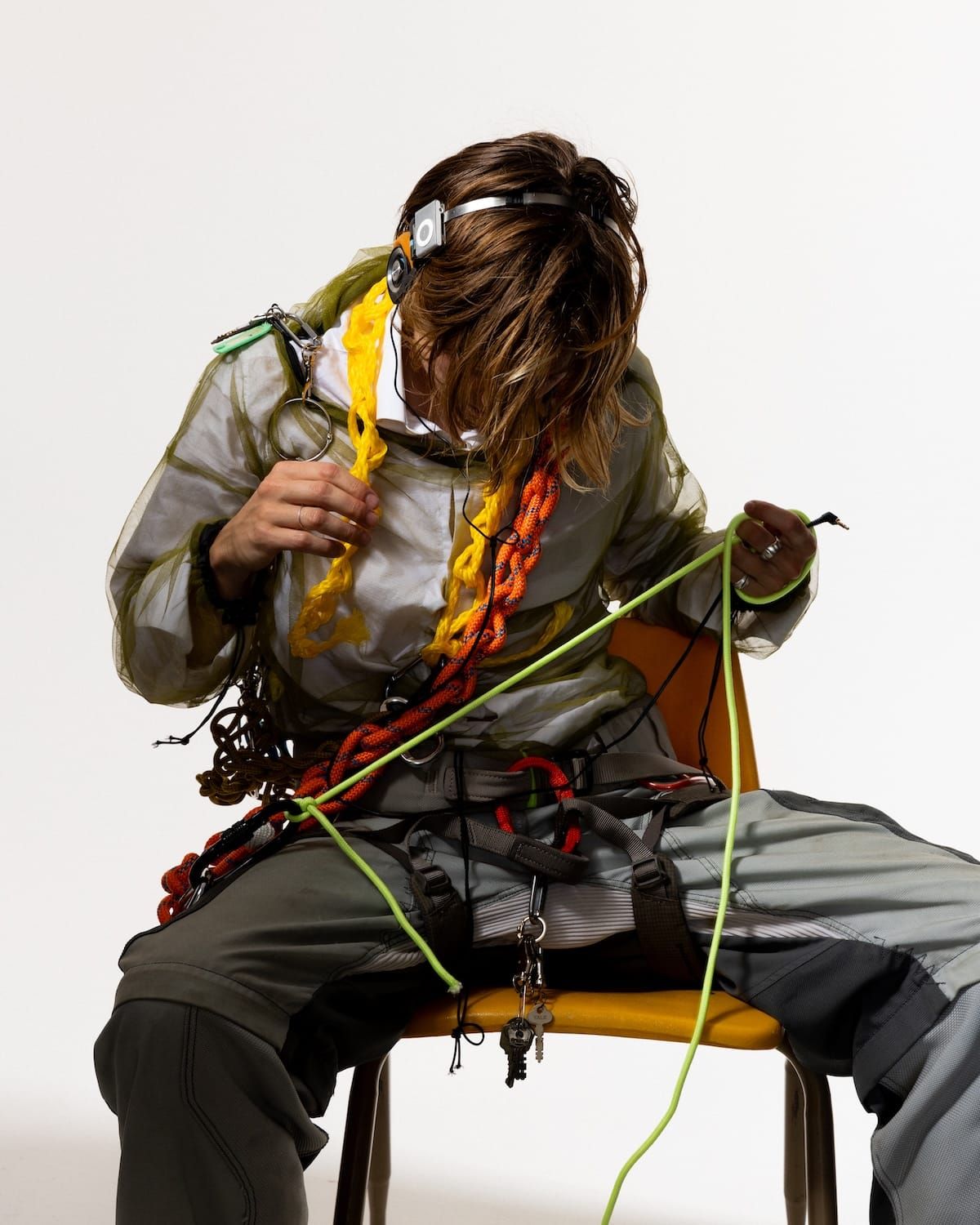
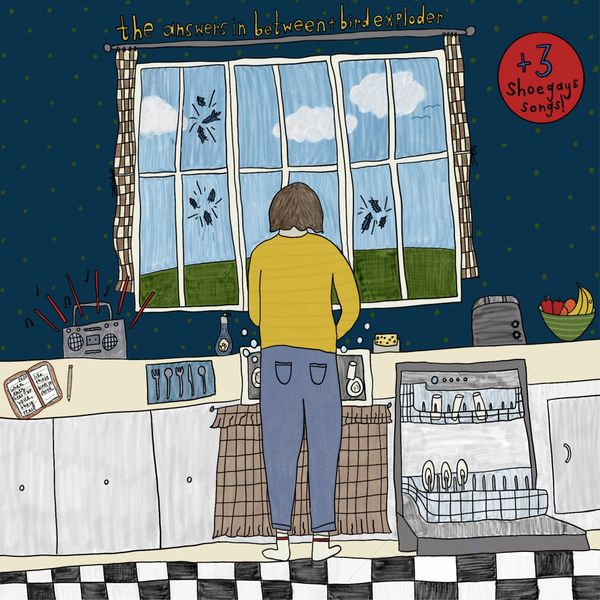
Mal Hauser has worked with several Hannahcore artists like NoSo, Miya Folick, and Gordi (they’re currently working together on a project!)
Their own music has, until this point, been on the softer, folkier side: with this project, they came out of the gate with a surprisingly upbeat song inspired by rave culture and IDM artists like Four Tet. Normally, there are lots of screenshots and hundreds of tracks to go through. However, as we discover, this is not a song with hundreds of tracks, but a simple one with lots of organic moving parts. You will not find VSTs and Splice samples here.
The album, Sophomore, was originally supposed to come out in August, but they're working on a clothing line, a fashion show, more music videos, and other projects to build out the world of the album. It's now set to be out next year, so be on the lookout!
Back in August, I spoke with Mal, and I’m happy to present this interview with them. For this song, they were inspired by Lois Lowry's The Giver, the Wachowski's The Matrix, and recruited Sarah Tudzin (of Boygenius and Eliza McLamb fame, and a white whale for this newsletter,) on drums. It's a fascinating song, and I loved getting into it with them.

In these lyrics, you reference the Giver and the Matrix. Given the Matrix’s origins, I have to ask how related those references are to the overall rave culture imagery as well as the obvious gender themes in the Matrix.
The Giver was one of my favorite books I had assigned reading for school, and it was one of my favorite books to read. And I just remember it so visually. And I think there's this otherness you might feel in life, and for me, it's definitely through the lens of gender. That's a big part of it, but that difference is not a shortcoming, it’s actually a superpower, and I feel both of those stories really portray that in such a beautiful way, the Giver and the Matrix. Of course, the difference can be burdensome, but that's who they are, that's their destiny, and I think that's beautiful.
Talk about developing the song and its structure.
Sophomore had a really big split down the middle because some of it was in my old space, and then the Los Angeles fires hit and I had to move. The second half of a lot of these songs are more of the meat of it, which is why there are a lot of outros that go in different directions. My set-up was largely Apogee Quartet and vocals through the Roland Space Echo - I used this Line6 POD amp modeler when I couldn’t mic an amp. It’s a small little guy that I mainly used on vocals and guitar toward the end of the process. I also used an SH-101 on the bass synth.
I started with the drum loop, then I added the synths, then I added guitar. I showed a work in progress to Baek of NoSo, and he said “I think this should just be an electronic song” - I was tempted, but I thought “what if I just tried adding vocals and seeing how far I can push this? I already had a version that existed, so I found my way into the structure by adding vocals and adding Sarah’s drum beat. Quite far in advance, I thought it would be cool if there was a random rock beat here, and calling that the verse, and everything naturally lead to the next thing.
DRUMS:
The first thing I wanted to ask was about the drum loop at the beginning, the very clipped sound. Is that a loop that you made?
There's a drum machine called the Perkions HDO-One that Erica Synth makes - I love it because there's no screens on it. You can manipulate sounds, you can design sounds in real time as you're building the beats and record what you do. You can just really immerse yourself in it and interact with it in a very live way. That drum machine is very industrial sounding, so it’s a fun challenge to make that vibe fit in a more live-guitar-based world.
That drum machine is technically digital, but it feels analog. You can send out each individual track [to an input in Pro Tools], and you can also sum it out. So it’s a good way to record and have access to manipulate the sounds, even after you make them on the drum machine. I try to design the sound before it hits the DAW as much as possible. So my sessions often look simple
How did you get Sarah’s drums?
We were going for Porches meets Four Tet with Amorph(e)us. I didn't have a space to record much of anything, especially drums. Sarah Tudzin had just moved into her new spot, and I was asking if I could use a studio. She hadn't recorded there yet, and I knew I wanted to take it out of this more ambient electronic world into more of that live. All of a sudden, there was a rock beat [in my demo], and I knew that Sarah would get the references I was going for.
She was showing me the studio, and we started trying to throw paint at the wall. She said, "I really hear this one beat on it," and then she took a stab at it and she crushed it. Her snare tone is so specific - it sounds almost jazzy to me, but it's not, because it's Sarah and there's so much energy to it.
There’s some electronic percussion on the last project you did, but I haven’t heard your music with live drums - can you talk about doing the live drums?
Yeah, on the song we're going through today, Sarah played some drums, which was really fun. I think I love the idea of pairing a drum loop with a live drummer. I think that choice places a song in a relevant modern world, but still retains the roots of music, and everything I listened to, that made me even want to pick up a guitar to begin with. So I think it's a fun way to marry the live sound with the electronic and still have humanity in it all.
GUITAR:
You’re known for playing rubber bridge guitars - can you talk about wanting to stay in that world even as this is an homage to rave culture? Even that drum machine is technically in the analog world.
I love to dance so much. I think it's one of the most amazing ways to release. It's another way to have such a beautiful, deep relationship with music. So I love to dance, and I definitely go to raves a lot, and just listen to instrumental electronic music a lot as well. It's refreshing to have no lyrics to listen to, and it's kind of meditative, that kind of music. My love for all of these things seeped its way into the stuff I'm making because I always want to make music that I would want to listen to or that would make me stop in my tracks.
There are tremolo effects and reverb effects on the guitar. Are those you? Are those James Krausse?
Funny enough, it’s not actually a rubber bridge, but it’s flat-wound strings. And I ran it through a RE-301, just a space echo, and the tape needed to be replaced – it was starting to distort in a really weird way – but I really loved it, so I kept it in there. Super simple, normally, I miic a guitar amp, but this record felt more DI based, and it felt more immediate that way. I mean, a lot of that came from limitations within my setup, but I didn't mind it. The warbly bell tones are all guitar as well.
SYNTHS:
What draws you to analogue synths?
I got an analog synth because of electronic music and techno, and then at the same time too, I use Pro Tools, so VSTs are harder to use. I think it just naturally fell into place, and there's more freedom in making your own sounds that way and committing to something, and trying to capture it live. And I personally just feed off of that a lot more. But yeah, I think that's why I got into analog specifically. It's just there's a certain saturation and warmth to it that's unbeatable. Digital can't really do that as much or as well.
Sometimes I’ll ask how someone got a sound and they’ll go “it was just a Splice sample”, and there’s nothing wrong with that, but -
It's just different!
I know it's been a minute since I've posted, but I really want to get back into this newsletter again. A really fun interview with Hero Magnus on her Hero Fest is coming up next week, so make sure you stay subscribed!